Assessing life-support
aboard Spaceship Earth
 The renowned 20th century
futurist, R
Buckminster Fuller envisioned our home world as essentially
a transport vehicle, accompanying the Sun on a voyage to parts
unknown, traveling across the universe. He named this vessel “Spaceship
Earth.” Another eminent 20th century thinker, chemist James Lovelock,
envisioned earth as an integrated and self-regulating (sentient) system
that adapts and maintains the suitable conditions for life on our
planet. He named this entity “Gaia.” It is in the blending of
these two visions of Earth that EcoTek proceeds.
The renowned 20th century
futurist, R
Buckminster Fuller envisioned our home world as essentially
a transport vehicle, accompanying the Sun on a voyage to parts
unknown, traveling across the universe. He named this vessel “Spaceship
Earth.” Another eminent 20th century thinker, chemist James Lovelock,
envisioned earth as an integrated and self-regulating (sentient) system
that adapts and maintains the suitable conditions for life on our
planet. He named this entity “Gaia.” It is in the blending of
these two visions of Earth that EcoTek proceeds.
The diameter of our Earth is a
mere 7,926 miles... contrasted with our solar system... with a diameter
of 2,790,000,000 miles... Earth is but a
speck of air, water, fire and soil in the vastness of space. Our solar
system, in turn, is but a speck compared to the Milky Way galaxy...
which is but a freckle on the face of universe. However... to the flora
and fauna on Earth... this planet is a vast, incredibly complex system
of interdependent processes of life. The geologic/biodiversity upon
and within our planet is
nothing short of a miracle. As stated above, a useful analogy is Lovelock's
Gaia Hypothesis in which Earth is seen as a living,
sentient organism.
A Quickening Climate
It is now clear that
climate change is accelerating at a greater pace than
previously projected. Earth's circulatory systems are increasingly being
severely impacted, at rates greater than anticipated by 20th century
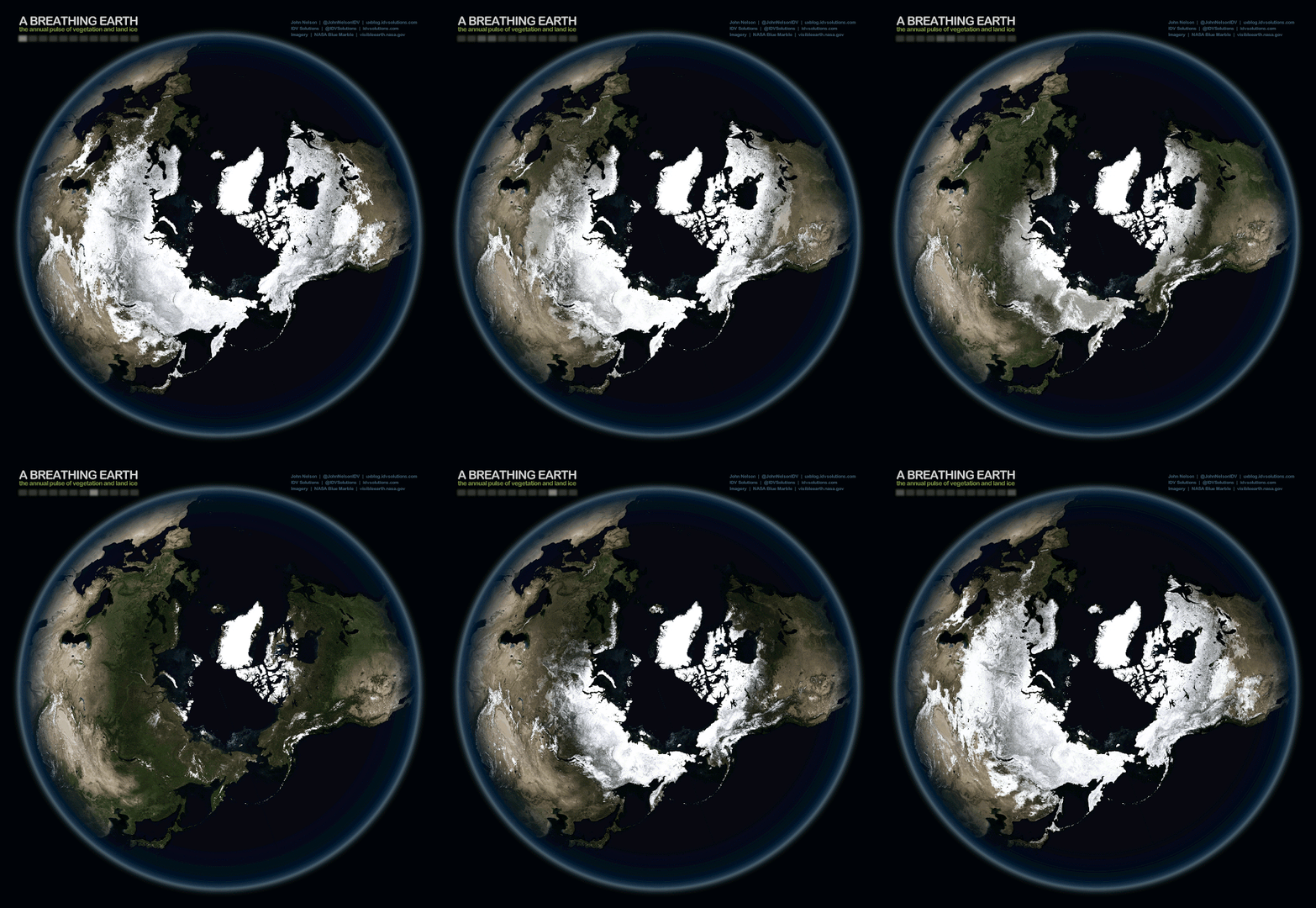
science. In the northern hemisphere, the rapidly melting Arctic ice reflects less
of the sun's rays, causing a warming disruption in the persistent,
low-pressure area circulating above the north pole, known as the
polar
vortex. This in turn, disrupts the jet stream, which circulates around the
polar vortex.
The
jet stream acts as a separating air
current that flows between the cold, polar air mass and the warm, tropical
air mass. Disruption to the polar vortex causes the jet stream to
meander... bringing more frequent bouts of severe weather to mid-latitudes.
As a result, the climate-change-driven
warming of our planet, can cause frigid cold weather to dip down to mid-latitude
environs such as the freezing storm that hit Texas in 2021.
The resulting power-outages in the Texas power grid caused massive disruption to
communities throughout the Gulf States.
Even more powerful, disruptive changes
should be anticipated, regarding other planetary circulatory systems. The Gulf Stream,
one of Earth's major climate-regulating ocean currents... is moving slower
than it has in thousands of years, a
recent study suggests. Research indicates
this unprecedented slowdown could impact weather patterns and sea levels on
both sides of the Atlantic.
Global warming increases annual rainfall
and accelerates the melting of ice sheets, including the Greenland Ice Sheet
in the North Atlantic. Both of these factors dump ever greater amounts of
freshwater into the ocean, reducing the density and salinity of the surface
water at the northern end of the Gulf Stream. According to research,
this freshwater inhibits how quickly the water can sink and begin its
journey back south, weakening the overall flow of the Gulf Stream.
The slowing ocean current will only worsen
over the coming decades if climate change continues unabated. If global
warming persists at its current pace, the Gulf Stream could pass a critical
“tipping point” by the year 2100, CE.
The dynamic, accelerating rate of change
to our planet's primary atmospheric and oceanic systems, indicate that
humanity has passed a “point of no return” in implementing any
meaningful mitigation strategies that would halt the devastating effects of
climate change. Humanity's culpability and non-action is self-evident. As we
shall expand upon below, the sad truth is... without massive human effort, we are increasingly left with only adaptation
strategies, moving forward.
Deep Spirit Ecology
 EcoTek is an ecological and environmental philosophy promoting the inherent
worth of all living beings, all flora and fauna aboard Spaceship Earth...
regardless of their perceived utility to human need. Our living, sentient
environment, our all-inclusive yet fragile ecosphere must be respected and
regarded as having certain inalienable legal and ethical rights to live and
flourish, regardless of human endeavor. This entails a radical restructuring of
modern human culture in accordance with such ideas. It entails humanity
recognizing our symbiotic place within Earthspace...
EcoTek is an ecological and environmental philosophy promoting the inherent
worth of all living beings, all flora and fauna aboard Spaceship Earth...
regardless of their perceived utility to human need. Our living, sentient
environment, our all-inclusive yet fragile ecosphere must be respected and
regarded as having certain inalienable legal and ethical rights to live and
flourish, regardless of human endeavor. This entails a radical restructuring of
modern human culture in accordance with such ideas. It entails humanity
recognizing our symbiotic place within Earthspace...
It is reasonable and fast becoming
necessary for earthling humans to actively yet humbly assume the role of
stewards of our small planet. This is so, because it is also reasonable
to assume the responsibility that humanity has, through population
growth, advanced
agriculture practices and fossil fuel consumption, added a
slight yet significant burden of greenhouse gases (CO2)
to our atmosphere, thereby contributing to our planetary system's
current atmospheric irregularity. This does not mean however, that EcoTek
subscribes to anthropocentric environmentalism or that humanity
should be given any preferential consideration over any other species coexisting
on this small planet.
With that said, and from the onset, it is important to understand that
any perceived climatic catastrophe, such as global warming, is primarily
catastrophic from the perspective of humankind and the artifacts of human civilization.
However, many species are impacted by our actions and as such, we must assume
responsibility for our part played. We are accountable as stewards,
precisely because of our technological success as a species, and for the
disruption this success has caused other species. For it is not only and merely
humans and our systems that will be adversely disrupted.
Ultimately, Earth and
her evolving systems… her rhythms… will be just fine, thank you very
much. Her changing cycles may or may not prove to be hospitable to
humans. Regardless of debate over culpability, humanity must return to a
symbiosis with
the rest of Earth's flora and fauna.
This must be done as a survival strategy and as a commitment to all life on
spaceship earth.
Again, it is now vital that we
all view the future with the eye of an environmentalist so we may ascertain
and address our home world's atmospheric and oceanic imbalance with a goal of planetary
climatic equilibrium. For in the end, it is humanity that is dependant upon the Earth, not the other way around.
For clarification on what is considered planetary
climatic equilibrium from humanity's perspective... the amount of greenhouse gases in earth's atmosphere
is measured and compared to historic levels. These gases are measured in parts per million
(ppm).
Up until 200 years ago, the historic norm was 275 part per million.
350 ppm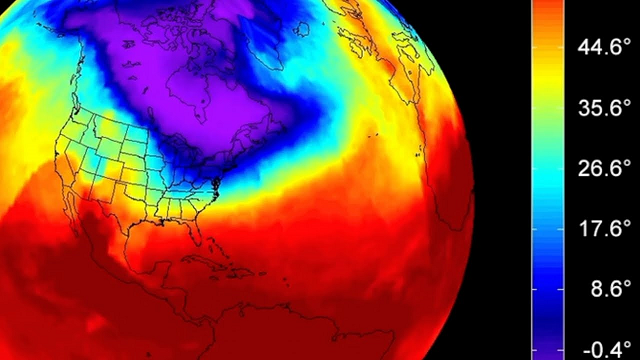 is what many scientists, climate experts, and progressive national
governments consider to be the safe upper limit for CO2 in our atmosphere.
Today, the ratio stands at 415 ppm and rising
a little more than 2 ppm annually. Having Exceeded the 350 ppm mark
indicates that our planet (and its atmosphere) has gone beyond the point of
no return for the old equilibrium. The resulting effects of exceeding this
tipping point is collectively referred to as
climate
change.
is what many scientists, climate experts, and progressive national
governments consider to be the safe upper limit for CO2 in our atmosphere.
Today, the ratio stands at 415 ppm and rising
a little more than 2 ppm annually. Having Exceeded the 350 ppm mark
indicates that our planet (and its atmosphere) has gone beyond the point of
no return for the old equilibrium. The resulting effects of exceeding this
tipping point is collectively referred to as
climate
change.
If humanity takes climate change seriously and acts now, we may be able
to achieve a new planetary equilibrium and stabilize at around 450 ppm
within the next 25 to 50 years. Leveling off at 450 ppm could result in a
global temperature rise of only 3.6°
F, with a potential large loss of species, more severe storms, floods and
droughts, refugees from rising sea levels and other extreme and inhumane
consequences. Unfortunately, this is an optimistic scenario.
The two basic strategies that
humanity has at its disposal to combat climate change are:
mitigation and
adaptation...
Mitigation
is any action taken to permanently eliminate or reduce the long-term
risk and hazards of climate change to human life and property.
This would involve altering the activities that
contribute to climate change through the application of technology and
practices. The primary example would be the immediate
cutting back of greenhouse gas emissions. This would require significant
discipline on our part, as well as technological innovation.
Adaptation would require a "coming to terms" with climate change
and managing its effects. This term refers to the ability of
a system to adjust to climate change (including climate variability and
extremes) to moderate potential damage, to take advantage of
opportunities, or to cope with the consequences.
Adaptation pertains to how we react to climate
change and what changes we make to deal with it's
advancement. One example of adaptation would involve moving
coastal populations to higher ground in anticipation of rising sea
levels.
Although we cannot
completely fathom the chaotic complexity of our planet's environmental
systems, the bottom line is... we must act. Humanity must rise to
the challenge of climate change. This is perhaps the most
definitive opportunity in our lifetime for
humanity to come together and collaborate on this global
issue... responding on a global scale.
We live
in an age in which intersecting crises are also impacting humanity a global
scale, with unseen levels of inequality, environmental degradation and
climate destabilization... as well as new surges in populism, conflict,
economic uncertainty, and mounting public health threats. All are crises
that are slowly tipping the balance, questioning our predator/dominator
economic model of the past decades, and requiring us to rethink our shared
future.
The
recent coronavirus pandemic must lead to a deeper understanding of the ties
that bind us on a global scale. Well-resourced healthcare systems are
essential to protect us from health security threats, including climate
change. Systems of support that rethink and rebuild the planetary economy
after the pandemic should promote health, equity, and environmental
protection. Time is
running out. If we don't act now, we will be left with only one option...
adaptation. If we do not enact planet-wide mitigation measures, our only
option... as a species... will be to either adapt or die.
Pertinent links and resources can be found at the bottom
of this page...